From The Dead Center Of Nowhere
2026.10.1 - 11.7
남석우 개인전
A solo exhibition by Seokwoo Nam
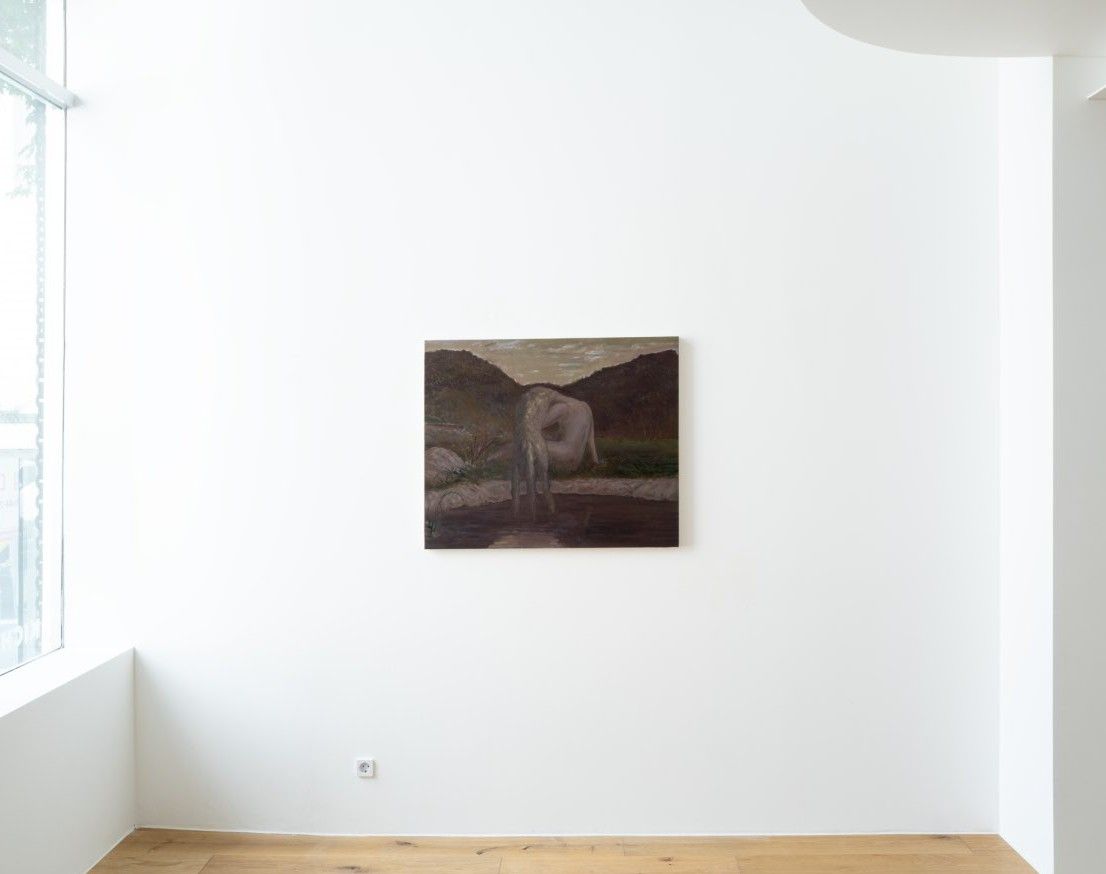
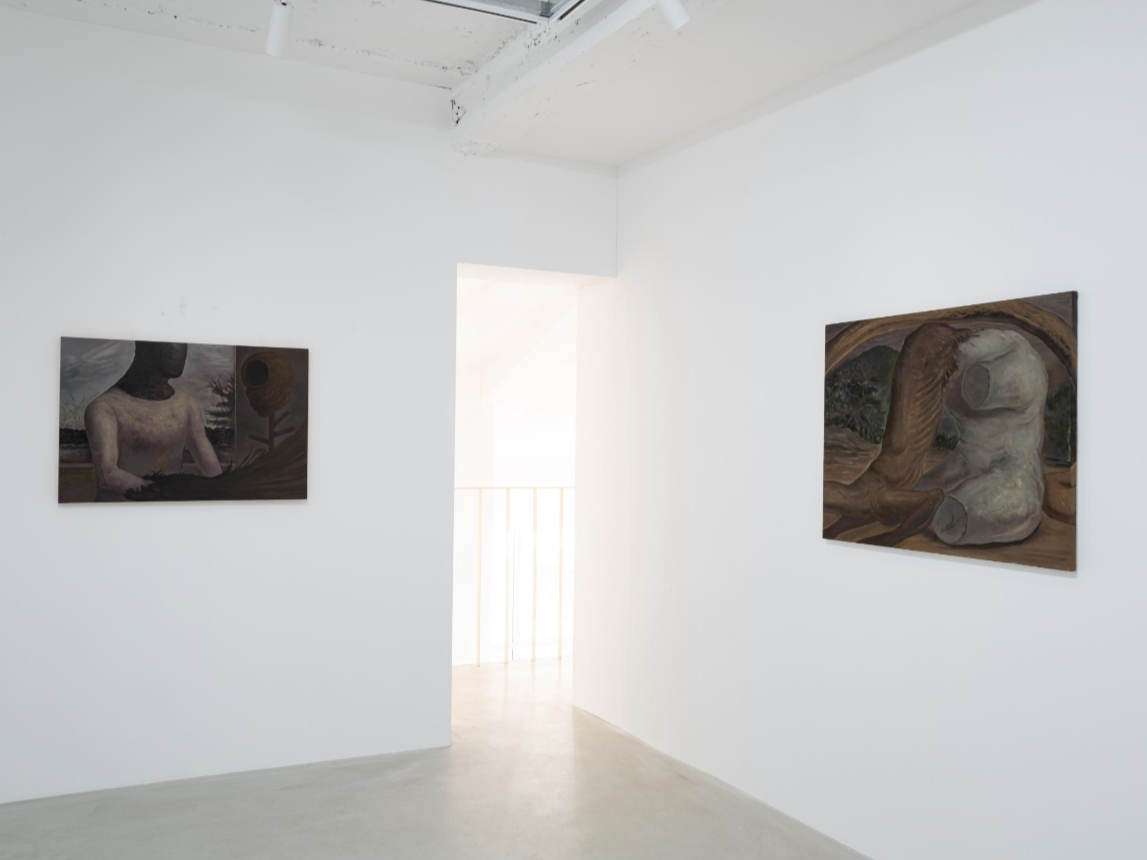
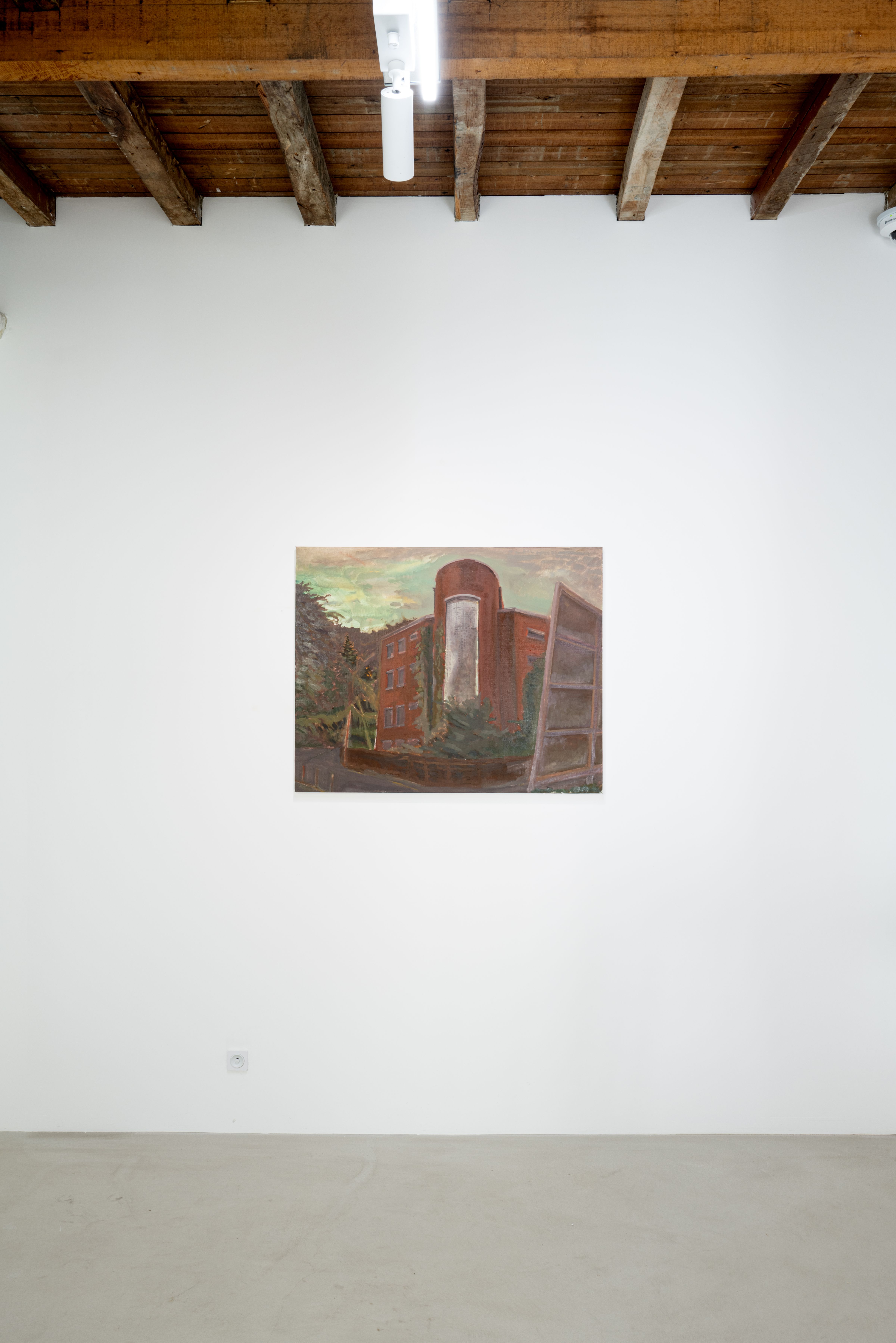
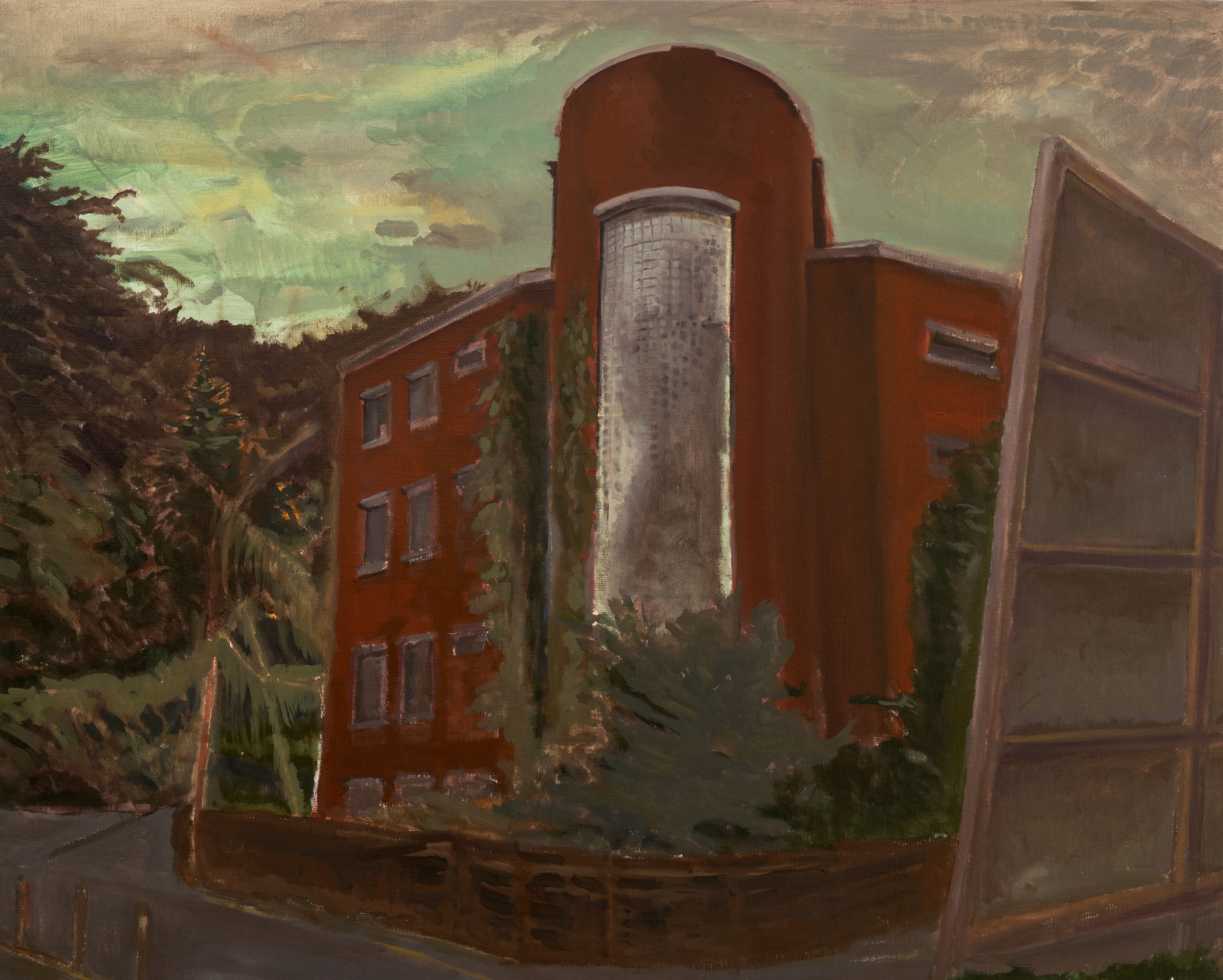
Nam Seokwoo’s paintings are grounded in the tangible and intangible impressions he encounters on his way to and from the studio: the gestures and voices of passersby, smells, the texture of the air against his skin, and the memories, reveries, and emotions that linger in his mind. Gathering fragments of sensation submerged in consciousness, he moves between past and present, imagination and reality, giving shape to figures and breathing life into the stories he constructs. For Nam, painting is akin to the stage of a one-act play, where the relationship between “the world” and “the self” is contemplated within a framework woven from images and narratives.
The title of Nam’s third solo exhibition, From the Dead Center of Nowhere, comes from a sentence in a novel. The artist often has the uncanny experience of situations encountered in books overlapping with the passage of everyday life. Even while walking around his studio, he finds himself suddenly wondering where he is and what this space is for. In those moments, the reality in which he stands temporarily becomes “a place that is nowhere.” Whenever his hand cramps, for instance, he recalls an old man’s left hand curling like a hawk’s talon in the middle of the sea. At other times, he confuses the world of an elderly locksmith with the dreams of someone heading out into rough waters. In this way, the landscapes inhabited by literary characters continually intersect with his own reality.
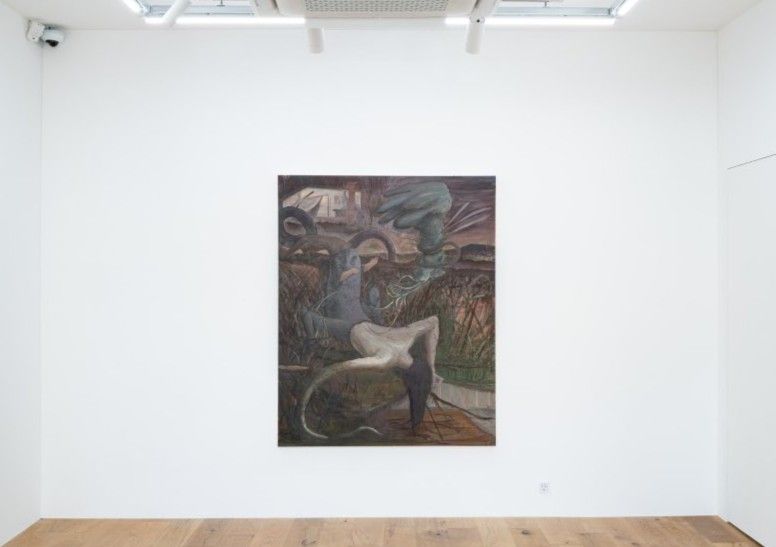
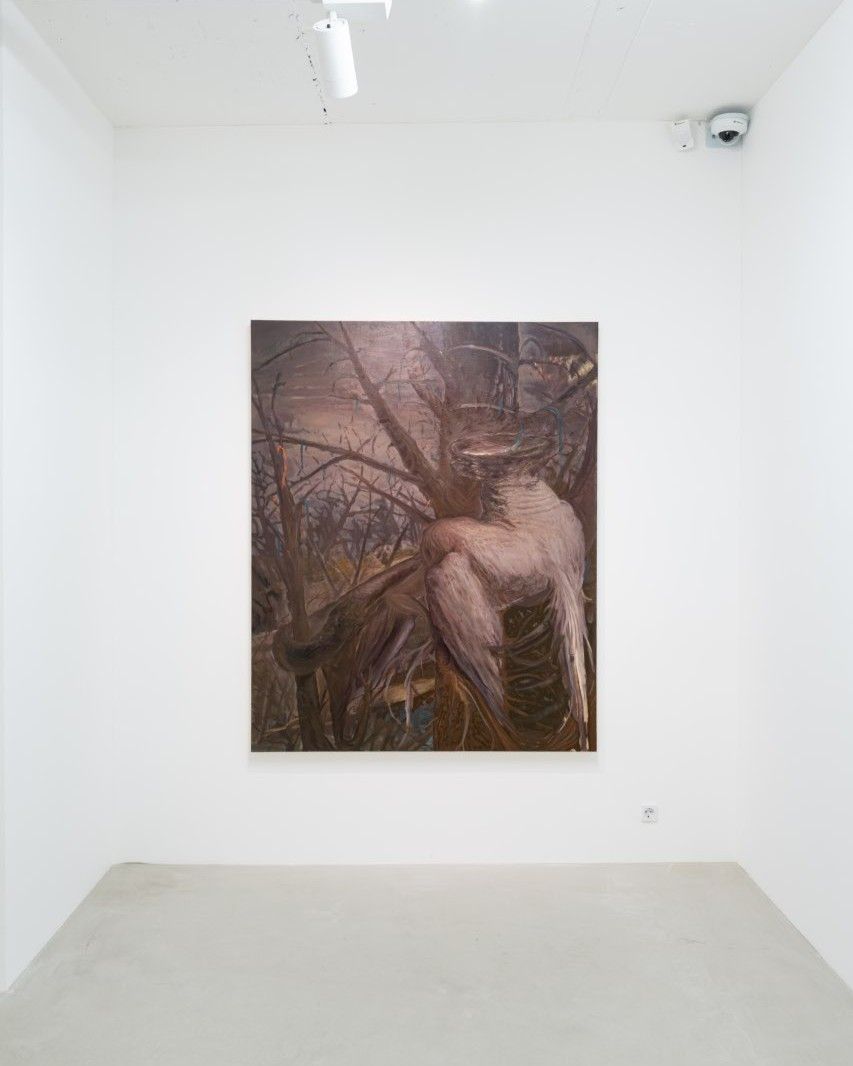
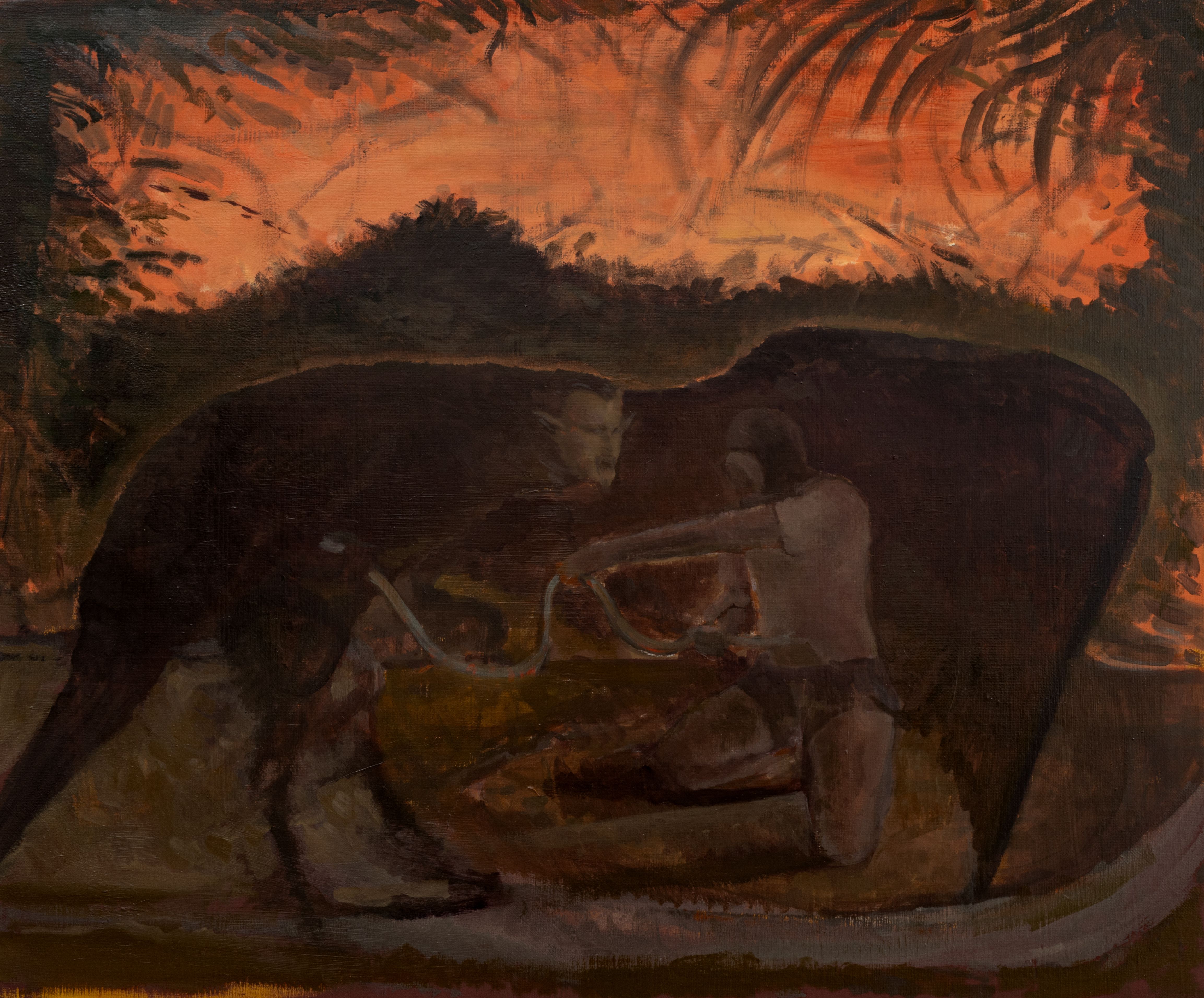
In Nam’s paintings, Greek mythology, tragedy and comedy, and tales of the imugi—a mythical serpent—from Korea’s Three Kingdoms period become entwined, bringing different temporalities, dimensions, and narrative systems into play. Bodies, too, occupy an ambiguous threshold between day and night, human and beast—or bird or imugi—and the organic and inorganic. Hazy, softly muted colors heighten this atmosphere. Yet the strange scenes the artist constructs and places on stage are not dream spectacles from which reality has evaporated. Rather, they are imaginative dramas grounded in realism and open to “the self in the present”: instead of taking refuge within the play, Nam persistently attends to and revisits the experiences and emotions held within him. Painting materials—canvas stretchers, paint boxes, and easels—along with the studio’s floor tiles, walls, and curtains, serve as buoys of everyday life that keep the stories from losing their way in empty space.
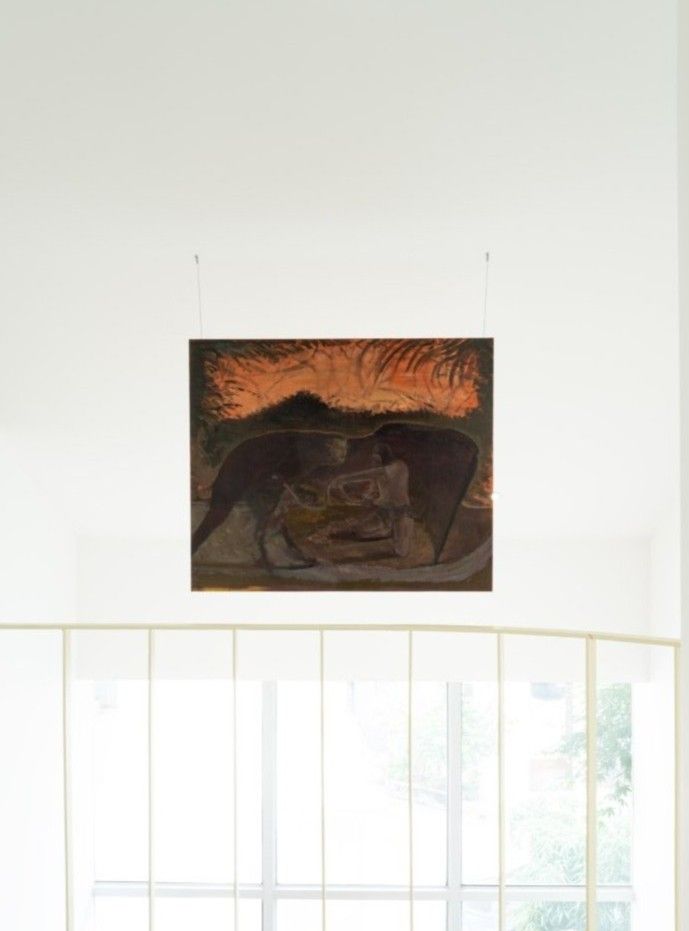
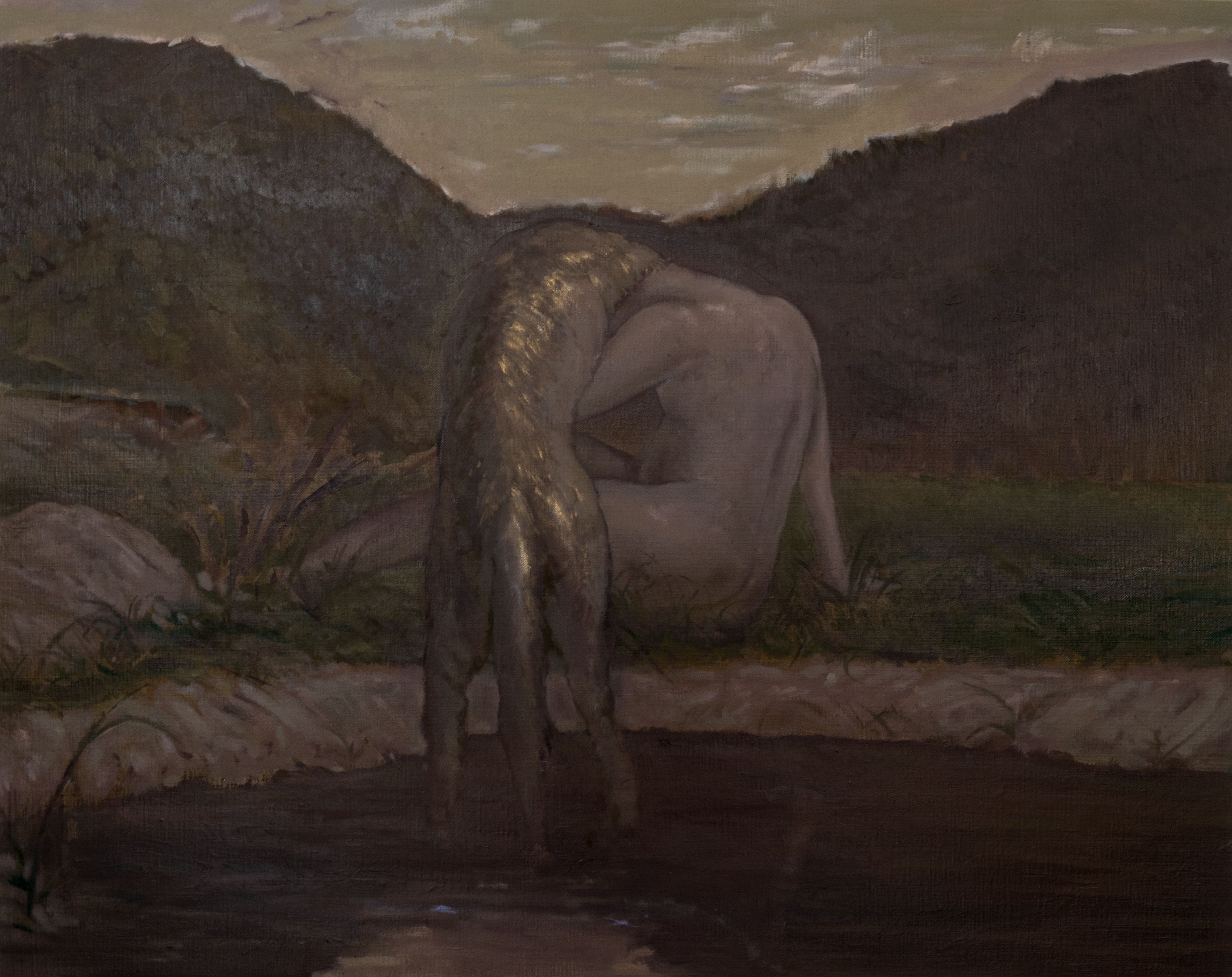
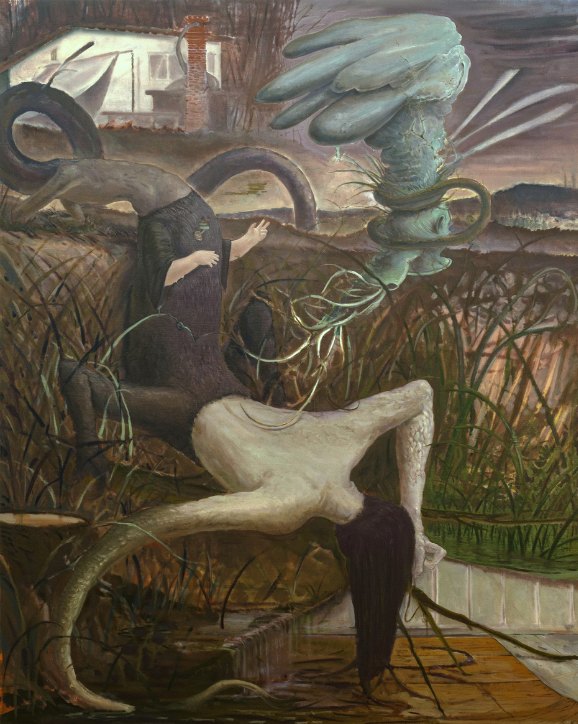
In The Rest on the Grass, the figure of a dog at the center of the painting merges with a nude human body. Nam shaped the landscape by recalling the peculiar feeling of being in the countryside at dusk, with smoke from burning rice straw spreading through the air. Having moved frequently as a child, he would have to spend brief periods in Damyang between moves. For him, the countryside was a kind of intermediate zone, a temporary place to stay before moving to a new home, and these were times pervaded by unease rather than comfort. The imagined countryside unfolding across the canvas is thus both a place and a non-place. Two mountains encircling the scene like wings, and the water beneath the dog’s feet, lend the painting a subtle tension. Ritual of Rain reveals Nam’s use of “directionality”—ascent and descent—as a central means of pictorial expression. For him, direction is a means of considering the physical flow of imagery and persistently adjusting the composition, thereby guiding the development of the narrative. The hybrid imugi crouching among the undergrowth is oriented downward overall. Its fur-covered midsection, however, points upward, while its long, trailing tail extends as far as the chimney of a house in the distance. From the center toward the upper part of the canvas, a facial form and wing-shaped clouds are arranged to lead toward Mount Mudeungsan in the distance, reintroducing an ascending energy in an attempt to create a cyclical structure.
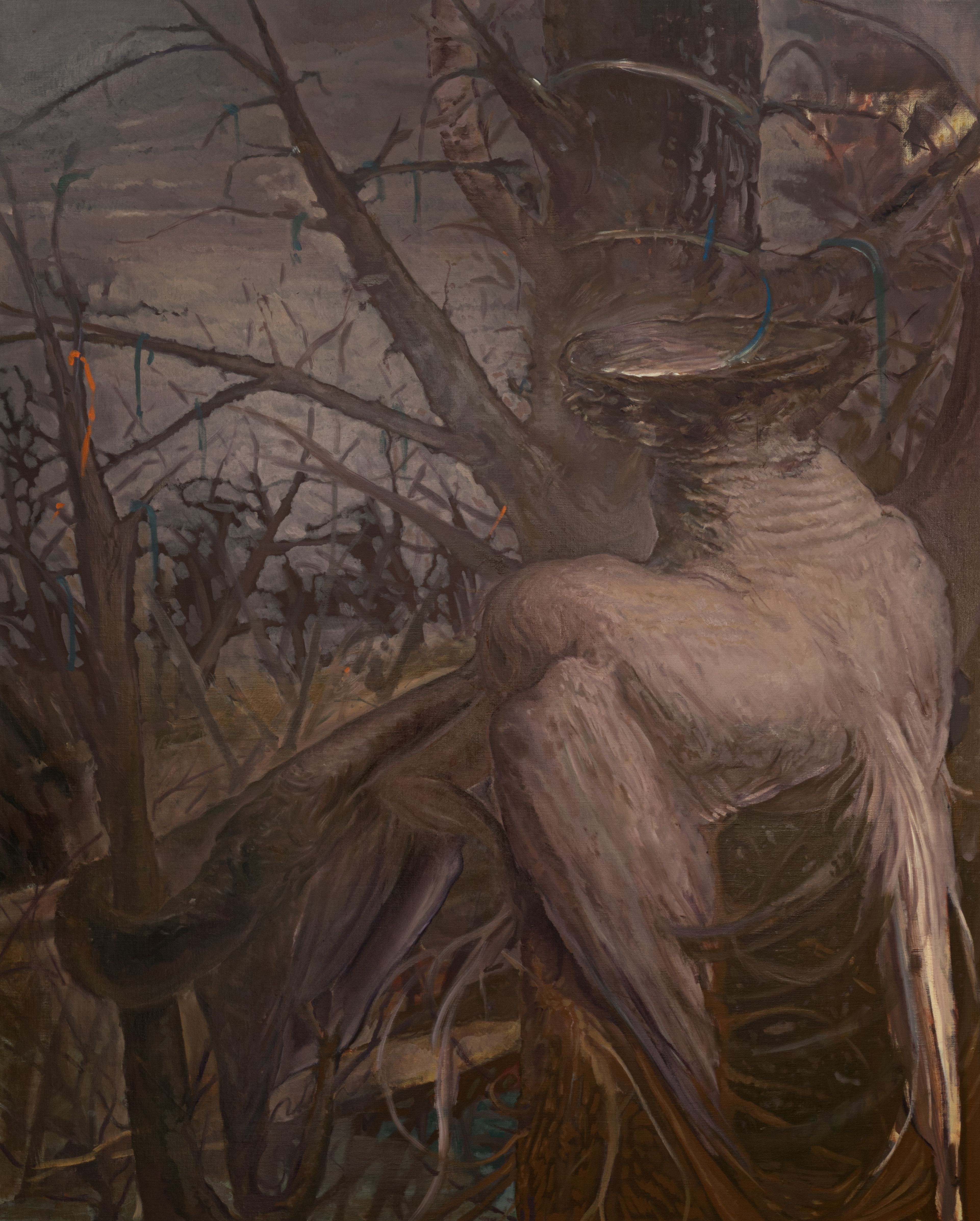
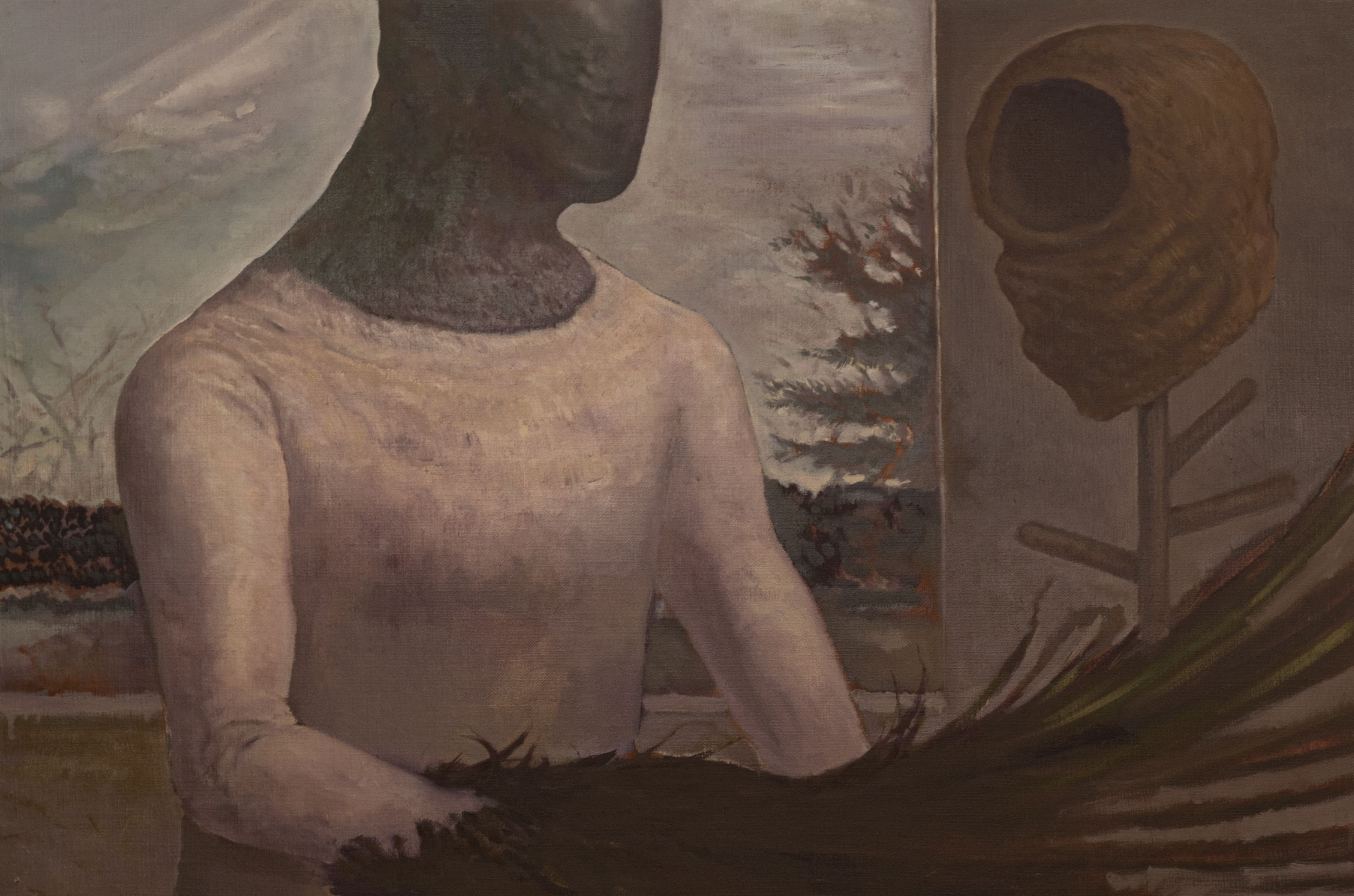
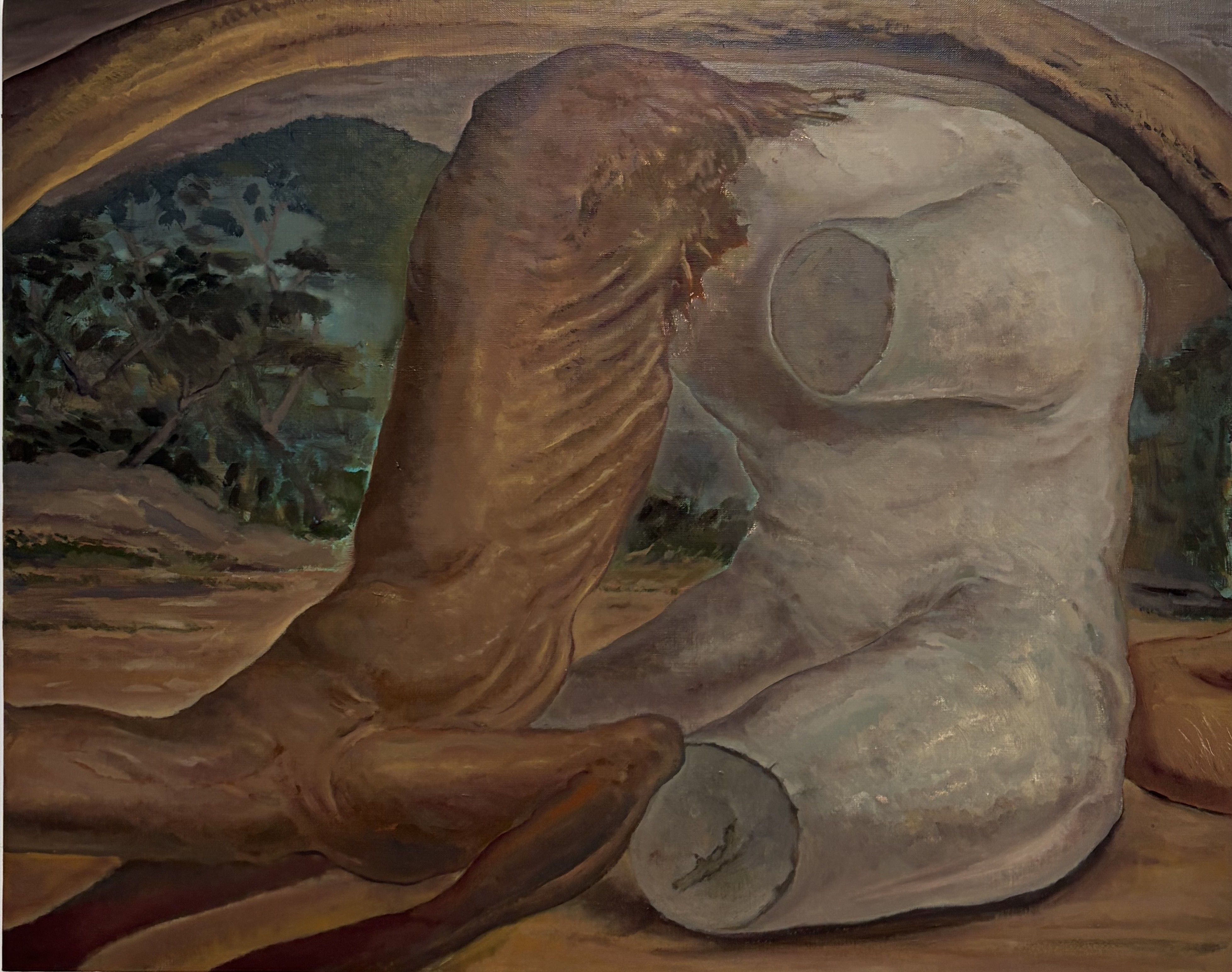
Faces are seldom clearly visible in Nam’s paintings. The empty “speech bubbles” he often uses in their place become symbolic signs that guide the events unfolding on stage toward an open ending. As his practice develops, these speech bubbles take on increasingly varied forms, becoming caves, musical instruments, boxes, and jars. While the scenes he creates present highly specific images and events, their ambiguous editing and omissions prevent them from resolving into a single, complete narrative. The figures, places, and times he paints thus occupy a threshold: the dead center of nowhere. And there the artist pauses, quietly asking, “Where would you like to go now?”
작업실을 오가는 길 위에서 눈과 귀, 피부에 닿는 행인들의 몸짓, 말소리, 냄새, 공기의 질감 같은 유무형의 자극들, 뇌리에 남아 떠도는 기억, 몽상, 감정들은 남석우 회화의 밑바탕이다. 작가는 의식에 잠겨 있던 감각의 파편들을 붙들어 과거와 현재, 상상과 현실을 오가며 형상을 그리고 이야기를 지어 숨을 불어넣는다. 그에게 회화는 이미지와 서사로 엮어낸 기틀 위에서 ‘세계’와 ‘나’의 관계를 사유하는 단막극 무대에 가깝다.
남석우 작가의 세 번째 개인전 제목 ≪어느 곳도 아닌 장소의 한가운데서≫는 소설의 한 문장에서 왔다. 작가는 책으로 접한 상황이 일상의 시간 위로 포개지는 기묘한 경험을 하곤 한다. 작업실을 거닐다가도, 문득 지금 이곳이 어디이며 무엇을 하는 공간인지 스스로에게 묻는 순간이 찾아온다. 그 시간 동안 작가가 발 디딘 현실은 '어느 곳도 아닌 장소'로 일시적인 변모를 겪는다. 예컨대 손에 쥐가 날 때마다 그는 바다 한가운데에서 매 발톱처럼 오그라들던 어느 노인의 왼손을 떠올린다. 혹은 나이 든 열쇠공의 세계와 거친 바다로 향하는 이의 꿈을 혼동하기도 한다. 문자로 지어진 이야기 속 인물들의 풍경은 그렇게 작가의 현실 위로 끊임없이 교차한다.
그의 그림에서는 얼굴이 잘 드러나지 않는다. 얼굴 대신 즐겨 쓰이는 빈 ‘말풍선’들은 무대에서 펼쳐진 사건을 열린 결말로 안내하는 상징적 기호가 된다. 작업을 이어가면서 ‘말풍선’은 차차 동굴, 악기, 상자, 항아리 등 점차 다양한 형태로 변주된다. 따라서 작가가 만들어낸 각각의 장면들은 이미지와 사건을 매우 구체화해 제시하지만, 모호하게 편집되고 생략돼 하나의 이야기로 완결되지 않는다. 이렇듯 그가 그려내고 있는 형상, 장소, 시간은 경계면, 즉 어느 곳도 아닌 장소의 한가운데에 위치한다. 그리고 작가는 거기 멈춰 “이제 어디로 가시겠습니까?”라는 질문을 담담히 건넨다.
글. 윤두현
Seokwoo NAM(b.1997) graduated Chosun University (Gwangju) with B.F.A in Painting. He has held solo exhibition at U·Square kumho gallery (2023, Gwangju). He has staged and participated in various group exhibitions at Gwangju Museum of Art (2024, Gwangju), Ark art gallery (2023, Gwangju), Sansussari (2023, Gwangju), and more.
남석우(b.1997)은 조선대학교 미술대학 미술학부 서양화전공을 졸업했다. 개인전으로는 유스퀘어-문화관 금호갤러리 (2023, 광주)에서 가졌고 갤러리 기체 (2026,서울), 광주시립미술관 하정웅 분관 (2024, 광주), 아크갤러리 (2023, 광주), 산수싸리 (2023, 광주) 등에서 그룹전을 가졌다.